
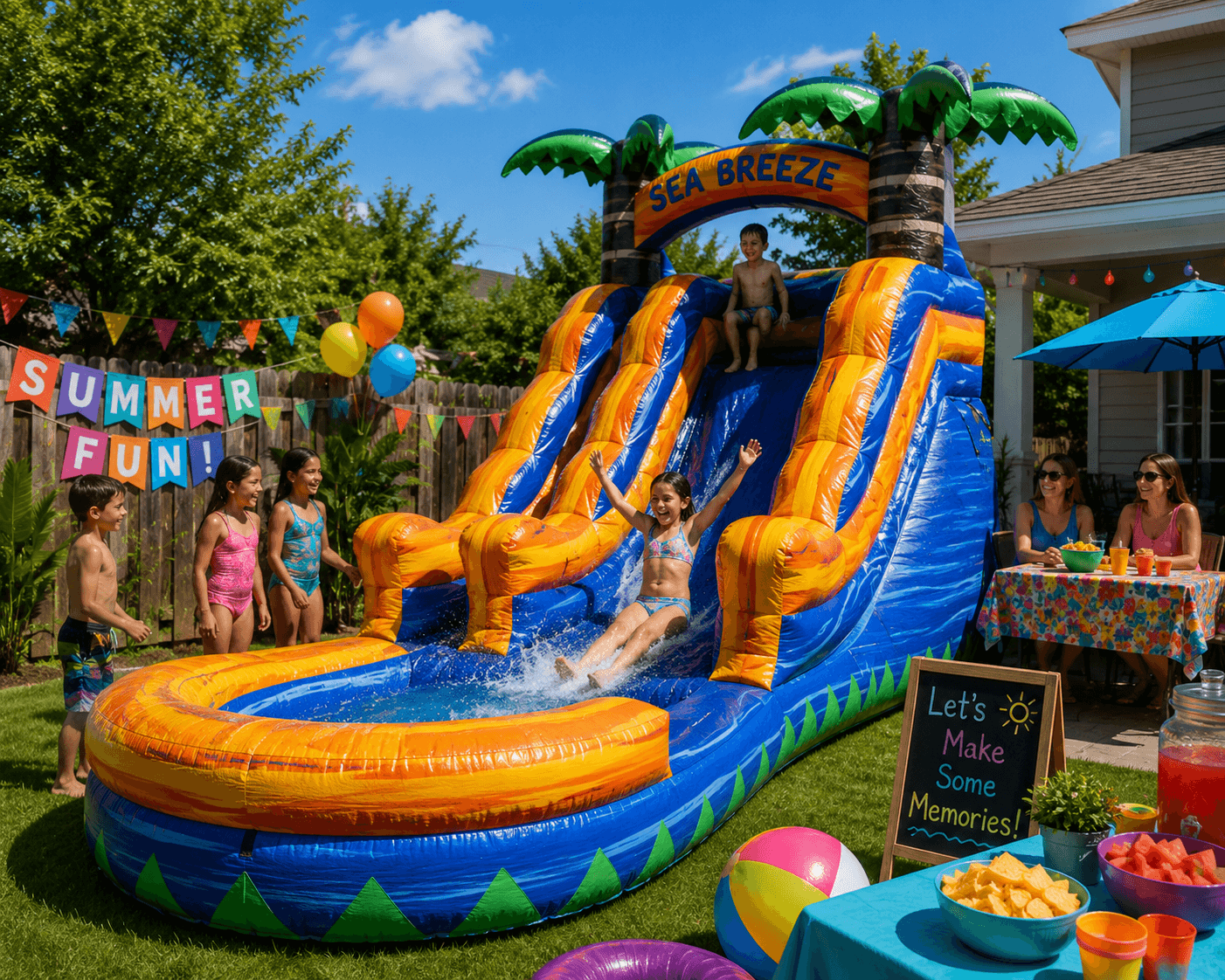
Everything You Need to Know Before Renting a Water Slide
Have you ever started planning an event and wondered whether a water slide is the right choice? Many people know water slides are popular during warm weather, but they often have questions about setup requirements, safety considerations, sizing, and what to expect before the rental arrives.
A water slide can provide hours of outdoor entertainment, but choosing the right inflatable involves more than simply picking a design. Understanding space requirements, water access, participant age ranges, and safety guidelines can help make the experience smoother for everyone involved.
This water slide rental guide explains the key factors to consider before renting an inflatable water slide, including setup needs, safety practices, sizing considerations, and common questions people ask during the planning process.
What Is Included in a Water Slide Rental?
One of the first questions people ask is what actually comes with a water slide rental.
While specific inclusions vary, most inflatable water slides consist of several key components:
- The inflatable slide itself
- Blower equipment
- Water connection system
- Anchoring equipment
- Setup and takedown procedures
Some units also include additional features such as splash pools, climbing walls, slip-and-slide attachments, or dual lanes.
If you're exploring different types of inflatables, browsing a collection of available water slides can help you understand the variety of designs and features commonly available.
How to Choose the Right Water Slide Size
One of the most common planning mistakes is focusing only on appearance rather than practical fit.
What Size Water Slide Do I Need?
The best size depends on several factors:
- Age of participants
- Number of guests
- Available setup space
- Event duration
- Water availability
A slide that works perfectly for younger children may not provide the same experience for older kids, while larger slides often require additional clearance and setup space.
Why Height Isn't the Only Factor
Many people compare water slides based solely on height, but professionals often evaluate additional factors such as:
- Sliding lane length
- Pool depth
- Climbing area design
- Participant capacity
- Traffic flow
These details can have a significant impact on how guests interact with the inflatable throughout the event.
What Are the Water Slide Setup Requirements?
Before renting any inflatable, it's important to understand what the setup area needs.
How Much Space Does a Water Slide Require?
Every inflatable has specific dimensions, but you'll also need extra room for:
- Safety clearance
- Anchoring systems
- Blower placement
- Entry and exit zones
Accurate measurements help prevent setup challenges on event day.
Water Access and Power Requirements
Most inflatable water slides require:
- A standard water source
- A garden hose connection
- Continuous electrical power for the blower
The blower must remain running while the inflatable is in use to maintain proper air pressure and structural stability.
Can Water Slides Be Set Up on Different Surfaces?
Water slides can often be installed on:
- Grass
- Artificial turf
- Concrete
- Asphalt
- Indoor facilities designed for inflatables
Different surfaces may require different anchoring methods and safety considerations.
Water Slide Safety for Kids: What Parents Should Know
Safety is often the most important factor for families planning an inflatable event.
Fortunately, many common concerns can be addressed through proper supervision and adherence to established safety practices.
Separate Participants by Age and Size
One of the most widely recommended safety practices is grouping children by similar age and size.
Large differences in weight and height can increase the likelihood of accidental collisions.
Follow Occupancy Guidelines
Every inflatable is designed with recommended participant limits.
Following these guidelines helps maintain safe operation and reduces overcrowding.
Keep the Slide Area Clear
Participants should avoid bringing:
- Shoes
- Jewelry
- Toys
- Sharp objects
- Loose accessories
Removing these items helps reduce injury risks and protects the inflatable.
Monitor Water Conditions
The slide surface should remain appropriately wet during operation.
Too little water can affect sliding performance, while excessive pooling around the inflatable may create slipping hazards outside the unit.
Wet Slide vs Dry Slide: What's the Difference?
Many people search for the difference between a wet slide and a dry slide before choosing an inflatable.
Wet Slides
Wet slides are specifically designed for water use and often include:
- Splash pools
- Water sprayers
- Water runoff systems
- Slip-resistant climbing surfaces
Dry Slides
Dry slides operate without water and are commonly used during cooler weather or indoor events.
They may look similar but are built with different operating conditions in mind.
Which Option Is Better?
Neither option is universally better.
The ideal choice depends on:
- Weather conditions
- Participant ages
- Event location
- Available water access
- Event goals
Understanding the intended use helps ensure the inflatable matches the event environment.
A Water Slide Rental Checklist Before Event Day
Having a simple plan can help reduce last-minute surprises.
Water Slide Rental Checklist
- ✔ Measure the setup area
- ✔ Verify access paths for delivery
- ✔ Confirm water source availability
- ✔ Check electrical outlet access
- ✔ Review participant age ranges
- ✔ Understand occupancy recommendations
- ✔ Monitor weather forecasts
- ✔ Create an adult supervision plan
- ✔ Clear the setup area before arrival
- ✔ Review safety guidelines with participants
Completing these steps ahead of time can make event-day logistics much easier.
How Professionals Evaluate Water Slide Rentals
Experienced event planners often assess inflatable rentals differently than first-time renters.
Rather than focusing solely on visual appearance, professionals typically consider:
- Available space
- Guest demographics
- Traffic flow
- Water access
- Safety requirements
- Setup logistics
- Weather conditions
This broader perspective helps ensure the inflatable fits naturally into the overall event experience rather than becoming a logistical challenge.
A thoughtful approach often leads to better outcomes than simply selecting the tallest or most visually impressive slide.
For readers looking to learn more about inflatable options, the water slide category contains additional educational resources that explore related topics in greater depth. You can also reference our pillar resource for a broader understanding of inflatable planning concepts and event preparation.
Frequently Asked Questions
How much water does a water slide use?
Water usage varies depending on the slide size and design. Most units use a continuous but relatively moderate flow of water during operation.
Is a water slide safe for younger children?
Yes, when age-appropriate inflatables are selected and proper adult supervision is maintained. Participant age recommendations should always be followed.
How long does it take to set up a water slide?
Setup times vary depending on the inflatable size and site conditions, but most installations are completed before event activities begin.
Can a water slide be used without water?
Only if the inflatable is specifically designed for both wet and dry use. Some water slides are intended exclusively for water operation.
What surface is best for a water slide?
Grass is often preferred because it provides a softer landing area, but many inflatables can also be installed on other approved surfaces using appropriate anchoring methods.
What should I do if the weather changes?
Inflatables should not be used during lightning, severe weather, or unsafe wind conditions. Monitoring weather forecasts is an important part of event planning.
Final Thoughts
Renting a water slide involves more than selecting a design that looks fun. Understanding setup requirements, safety guidelines, sizing considerations, and operational needs can help create a smoother experience for both organizers and participants.
Whether you're planning a birthday celebration, school event, fundraiser, or community gathering, knowing what to expect ahead of time makes decision-making much easier.
If you'd like to explore this topic further, our related guides go deeper into inflatable planning, safety considerations, and event preparation strategies.