
Wet vs. Dry Inflatables: Which Option Is Right for Your Summer Party?
You're planning a kids' party for July or August, scrolling through inflatable options, and suddenly you're facing a choice you didn't expect: wet or dry? It sounds simple until you realize each option impacts everything from where you can set up to how long kids will actually play.
The difference isn't just "one has water." It's about party duration, mess management, age appropriateness, and whether your backyard setup can actually support what you're renting. This guide breaks down the real distinctions so you can choose confidently.
What You'll Learn
- What actually makes an inflatable "wet" or "dry"
- Which type of party guest are you?
- How wet vs. dry affects how long kids play
- Setup requirements and space considerations
- Real cost differences beyond the rental price
- Age-appropriate choices for different groups
- When combo units give you the best of both
- Common questions about wet and dry inflatables
Which Type of Party Planner Are You?
🌊 The Summer Maximizer
Your situation: Party is mid-June through September. Temps will be 80°F+. You want kids to stay engaged for 3+ hours. You have outdoor space and water access.
Best choice: Wet inflatables or combo units. Water play extends engagement significantly during hot weather and kids naturally rotate between cooling off and bouncing.
🏠 The Indoor/Mild Weather Host
Your situation: Party is spring, fall, or winter. You might use a garage, driveway, or indoor space. Temperature could be under 75°F. Mess management matters.
Best choice: Dry inflatables. They work in any weather, transition indoors easily, and don't create the post-party puddle cleanup wet units require.
🎯 The Flexibility Seeker
Your situation: Weather could go either way. You have kids of mixed ages (toddlers + older kids). You want options on party day based on actual conditions.
Best choice: Combo units with both wet and dry sections. These give you built-in flexibility—use water if it's hot, skip it if it's cooler, and accommodate different play styles simultaneously.
What Actually Makes an Inflatable "Wet" or "Dry"?
The terms sound obvious, but the functional differences go deeper than just "add water."
Wet Inflatables: Built for Water Flow
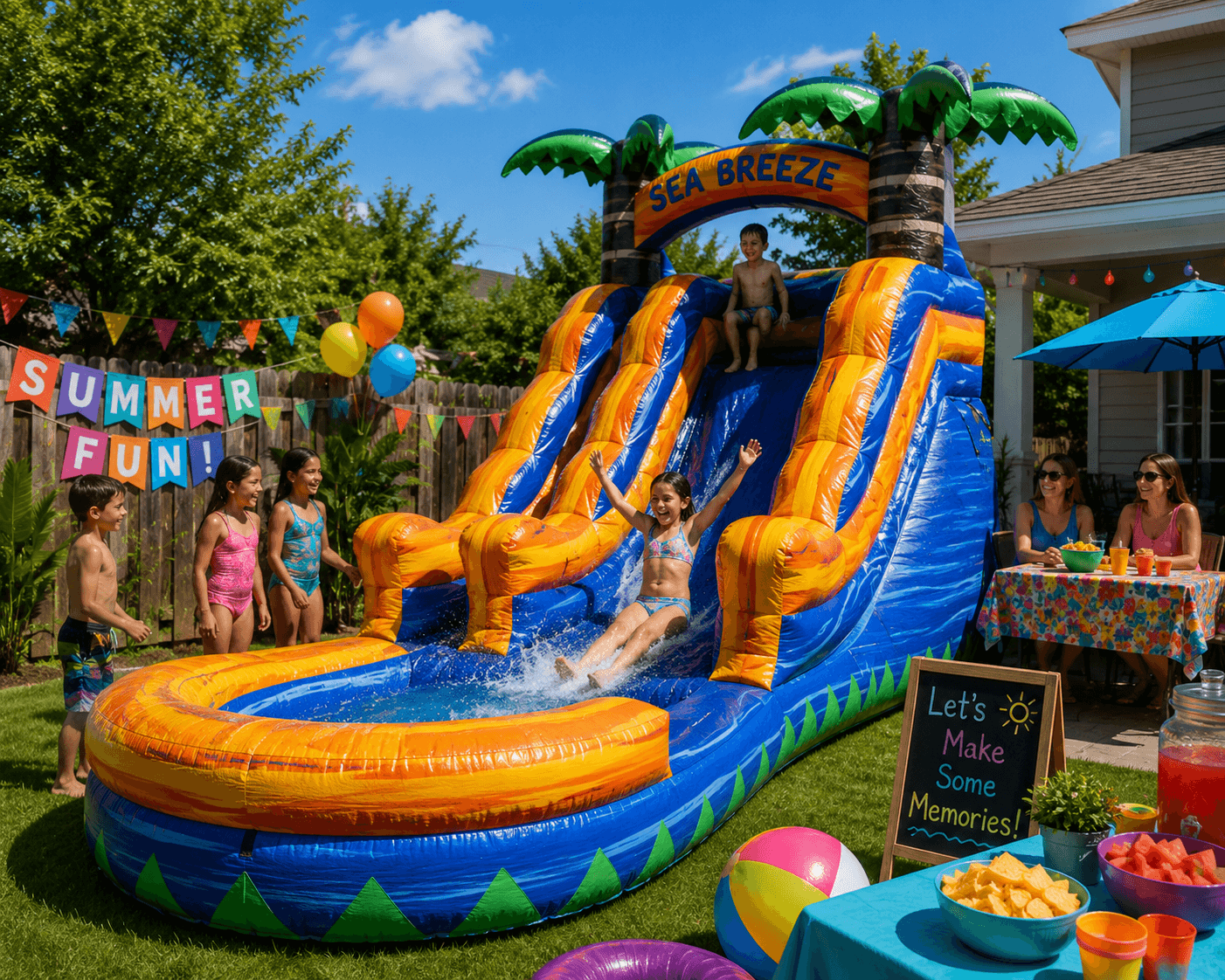
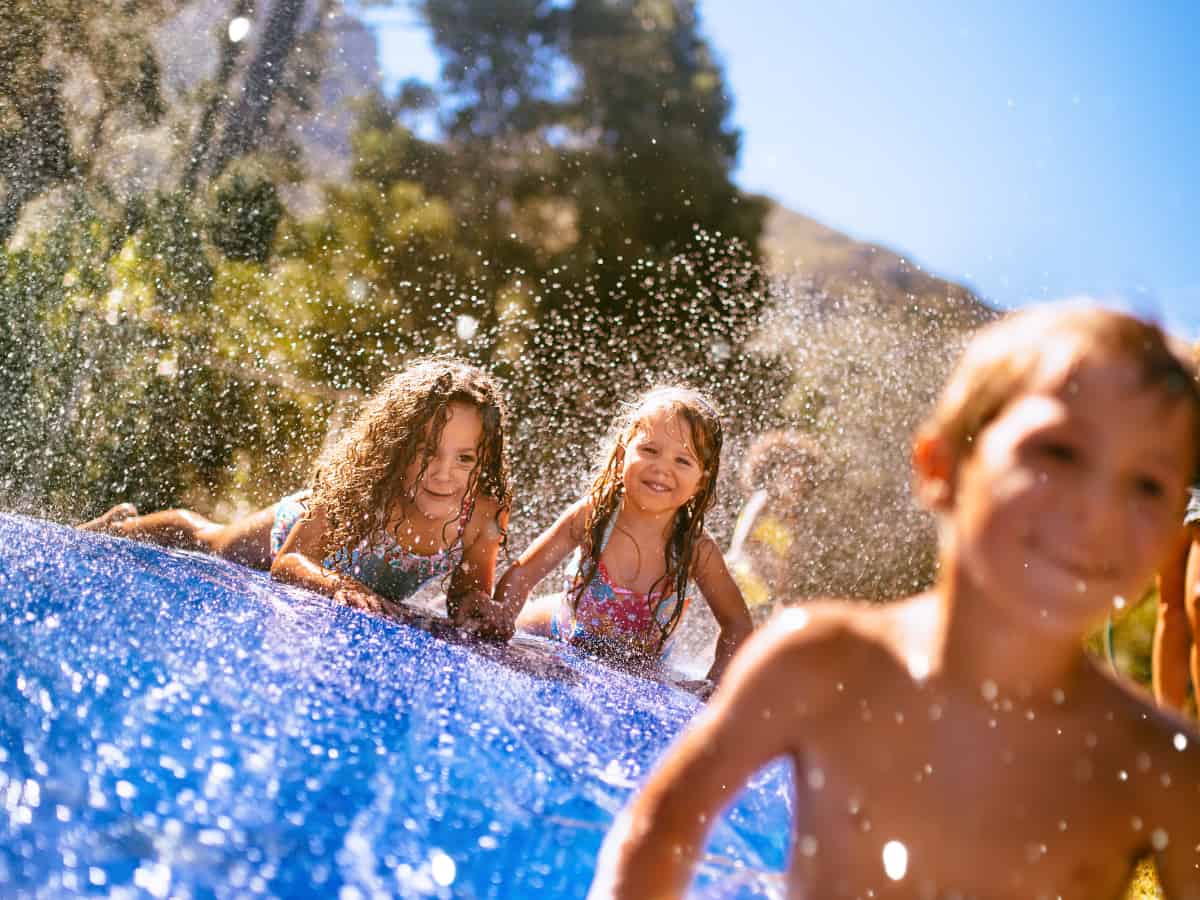
Water slides are the most common wet inflatable. They feature a slick sliding surface that requires continuous water flow for safe, smooth sliding. Most include a splash pool at the bottom—a shallow landing zone (typically 3-6 inches deep) that cushions the slide exit.
Other wet features include:
- Sprayer systems along the slide surface that keep it lubricated
- Misting arches or water curtains kids run through
- Splash zones separate from slides—like mini wading areas
- Water cannons or spray features kids control
All wet inflatables require a standard garden hose connection. The water runs continuously during use—it's not filled once like a pool. For detailed guidance on water source placement and hose requirements, our backyard water slide setup guide covers the technical requirements.
Dry Inflatables: Pure Bounce and Climb
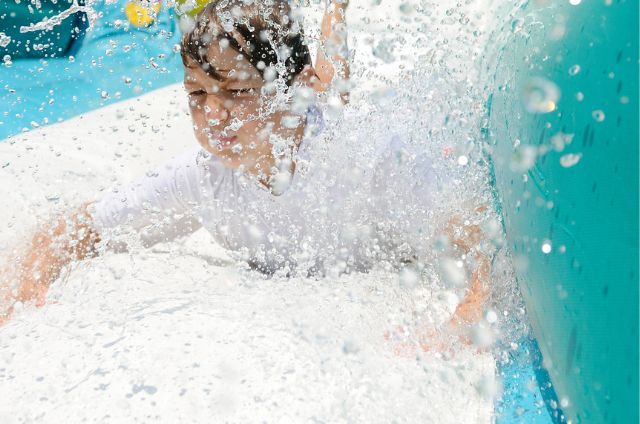
Dry inflatables include bounce houses, obstacle courses, interactive games, and dry slides. No water connections needed. Setup requires only electricity for the blower.
Common dry inflatable types:
- Traditional bounce houses with open jumping areas
- Combo units featuring bounce area + dry slide
- Obstacle courses with crawl-throughs, pop-ups, and climbing walls
- Interactive games like basketball hoops, soccer goals, or gladiator jousting
- Themed units shaped like castles, pirate ships, or character designs
Dry inflatables work indoors or outdoors, any season. They're the default choice for parties where temperature might dip below comfortable swimming weather or when you need flexibility to move the activity inside.
Key distinction: A "dry slide" is still a dry inflatable. Some inflatables feature slides without water—kids slide down on the material itself. These work fine but slide speed is slower than water-lubricated slides. They're common in combo bounce house units.
How Wet vs. Dry Affects How Long Kids Actually Play
Here's what most party planners don't realize until they see it happen: temperature and novelty dictate engagement duration more than the inflatable itself.
↑ What Extends Play Time
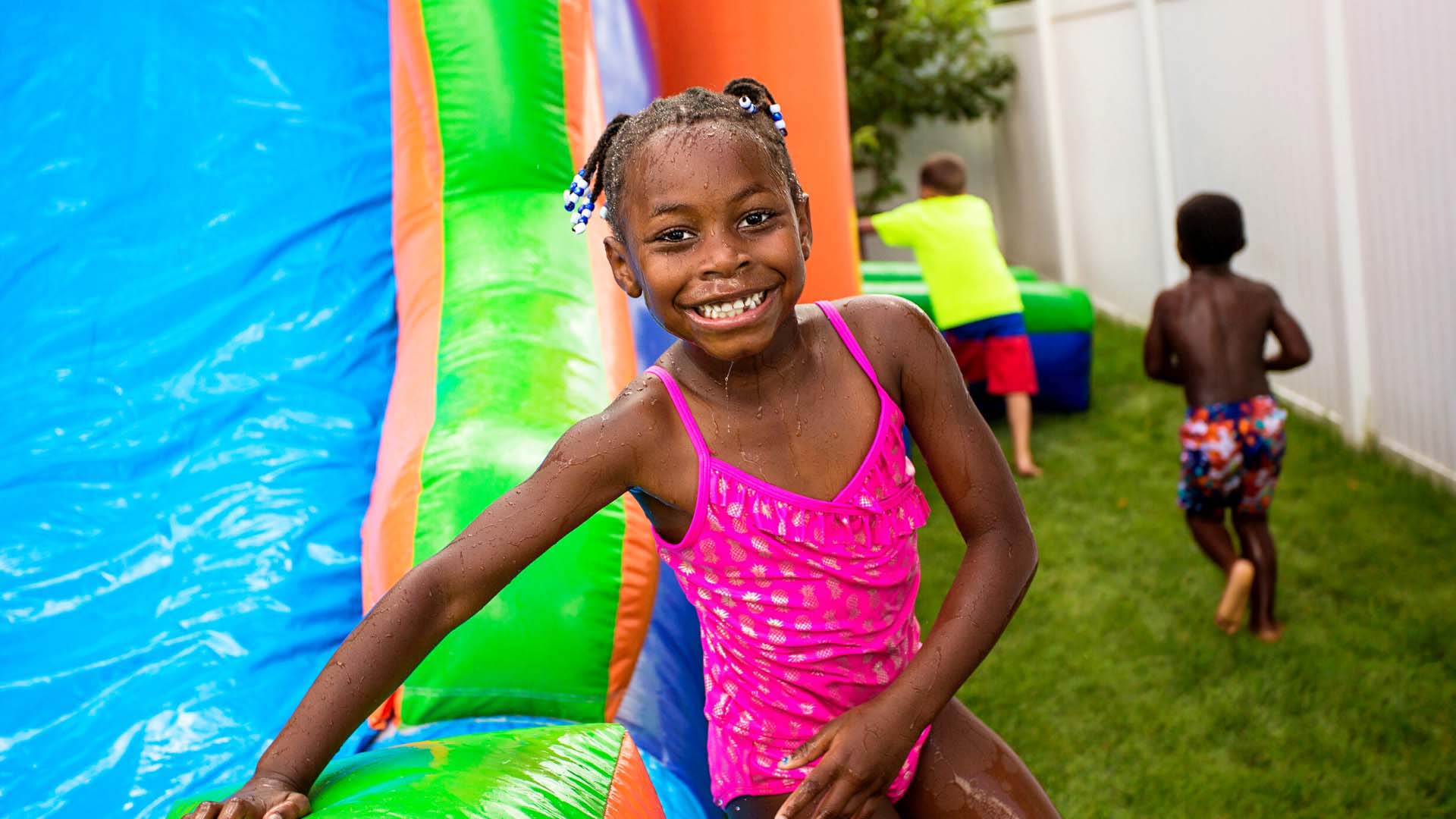
- Hot weather + water slides: Kids rotate between sliding and cooling off in splash zones. Engagement can last 2-3+ hours.
- Obstacle courses: Competitive races and challenges keep older kids (7+) engaged longer than open bounce.
- Combo units: Multiple activity zones prevent boredom. Kids switch between bounce, climb, slide.
- Proper age matching: Units sized for the age group maintain interest. Toddlers in toddler units, big kids in challenge courses.
↓ What Shortens Play Time
- Too cold for water: Below 75°F, most kids find water slides uncomfortable. Play drops to 30-45 minutes before they give up.
- Simple bounce-only units: Open jumping with no features gets repetitive after 45-60 minutes for kids over 5.
- Wrong size for age: Older kids in small units get bored. Little kids in huge units get intimidated.
- Single-activity focus: Just a slide or just a bounce area offers less variety than multi-zone units.
Real-world pattern: During San Diego summer parties (June-September), water slides typically see 2-3 hours of heavy use. Dry bounce houses at the same temperature get about 60-90 minutes before kids drift to other activities. The cooling effect isn't just comfort—it's a built-in reason to keep returning to the inflatable.
Setup Requirements and Space Considerations
Both wet and dry inflatables need similar footprint space, but wet units add one non-negotiable requirement: water access within hose reach.
What Every Inflatable Needs (Wet or Dry)
- Level ground: Grass, concrete, or asphalt. Slopes create uneven bounce and safety issues.
- Clearance space: 3-5 feet on all sides for stakes (grass) or sandbag placement (hard surfaces).
- Overhead clearance: No tree branches, power lines, or roof overhangs within 10 feet above the unit.
- Electrical access: Standard 110V outlet within 50-100 feet. The blower runs continuously.
- Path for delivery: Wide enough gate/walkway to bring the inflatable to setup location (most fold to 3-4 feet wide).
Additional Requirements for Wet Inflatables
Water source: Standard outdoor spigot or hose connection within 50-100 feet of the setup location. Most water slides need continuous water flow at normal household pressure (40-60 PSI). You'll connect a garden hose that stays attached for the rental duration.
Drainage consideration: Water continuously flows through the slide and exits via the splash pool. This creates runoff—usually 5-15 gallons per minute depending on the unit. Grass absorbs this naturally. Hard surfaces (concrete, pavers) will have standing water or runoff during use.
Sun exposure: Unlike dry units that work in shade or sun, water slides perform best in direct sunlight. Shaded areas make the water feel colder, reducing how long kids want to play.
Pool backyard concern: If you have a pool and limited yard space, wet inflatables require careful placement. You need enough clearance that kids exiting the slide aren't immediately near pool edges. Rental companies typically recommend at least 10-15 feet of separation for safety supervision.
Indoor Setup: Dry Inflatables Only
Dry inflatables can move indoors—garages, gyms, community centers. Wet inflatables cannot. Even "low-water" wet units create enough moisture and runoff to make indoor use impractical.
Indoor dry unit requirements:
- Ceiling height: Minimum 10-12 feet for most bounce houses, 12-15 feet for units with slides
- Floor protection: Tarps under the unit prevent scuff marks on gym floors or finished concrete
- Doorway width: Minimum 36 inches to move the folded unit through
- Climate control: Indoor bounce houses get warm with 8-10 active kids. Ventilation or AC helps.
Real Cost Differences Beyond the Rental Price
The rental price difference between wet and dry inflatables typically ranges from $50-$150 more for wet units of similar size. But that's not where cost considerations end.
Water Usage Costs (Usually Negligible)
Many parents worry about water bills. The reality: a typical water slide uses about 600-900 gallons over 4-5 hours of party use. In San Diego County, that's approximately $2-5 in water costs. Not a meaningful factor.
Hidden Costs That Actually Matter
Towel Supply
Wet inflatables mean every kid needs a towel. For 15-20 kids, you're either buying cheap towels in bulk ($30-50) or asking parents to bring them (which half forget).
Change Area Setup
Kids need somewhere to change into/out of swimwear. If you don't have an accessible bathroom or garage, you're setting up pop-up tents or privacy screens (added rental or purchase).
Supervision Intensity
Wet inflatables need constant adult supervision at the slide exit and splash zone. Dry bounce houses allow more passive monitoring. If you're hiring help, that's extra labor hours.
Post-Party Cleanup
Wet units leave puddles, wet grass, and muddy foot traffic. Hard surfaces need squeegee work. Dry units: sweep away dirt, done. Cleanup time difference: 15 minutes vs 45+ minutes.
Value consideration: If wet means kids stay engaged 2x longer, you're getting more entertainment value per dollar. If dry means less stress and faster cleanup, that time savings has value too. Cost isn't just the rental number.
Age-Appropriate Choices for Different Groups
Wet versus dry matters less than size and feature matching to your guest ages. A 3-year-old shouldn't be on a 15-foot tall slide regardless of whether it's wet or dry.

Toddlers (2-4 Years)
Best wet option: Small water slides with gentle slope (6-8 feet long) and shallow splash zones (2-4 inches). Look for enclosed sides and low exit points.
Best dry option: Toddler-specific bounce houses with low walls (3-4 feet max) and small footprints. No tall obstacles or steep climbs.
Elementary (5-10 Years)
Best wet option: Mid-size water slides (10-15 feet) with moderate splash pools. Combo units with both wet slide and dry bounce area work perfectly for mixed energy levels.
Best dry option: Obstacle courses or combo bounce/slide units. This age wants variety and challenge, not just open bouncing.
Tweens+ (11+ Years)
Best wet option: Large water slides (15-20+ feet) with steep angles and deep splash pools. Many tweens prefer slides to bounce houses at this age.
Best dry option: Interactive games (sports-themed, jousting, climbing walls) or competitive obstacle courses. Straight bouncing feels "babyish" by this age.
Mixed-age parties (siblings + friends): This is where combo units become essential. A 3-year-old and 8-year-old won't both enjoy the same single-feature inflatable. Combo units with separate bounce and slide zones let each age group self-select appropriate activities.
Safety rule: Wet or dry, never mix kids with 3+ year age gaps on the same inflatable simultaneously. Size and strength differences create collision risks. Rotate age groups or choose multi-zone units.
When Combo Units Give You the Best of Both
Combo units integrate wet and dry sections in a single inflatable. They solve the most common party planning dilemma: what if conditions aren't what you expected?
How Combo Units Work
A typical combo unit features:
- Bounce house section (always dry) — open jumping area with basketball hoop or similar features
- Climbing wall or obstacle leading to a slide platform
- Slide that can be used wet or dry, usually exiting to a splash pool area
- Optional water features — the slide gets sprayers, the landing becomes a splash zone
The flexibility: you decide on party day whether to connect the water. Forecast shows 68°F and cloudy? Skip the water, use the dry sections. Temperature hits 85°F? Hook up the hose and activate the full wet experience.
Why Combo Units Extend Engagement
Multiple activity zones prevent the "done with this" moment that happens with single-purpose inflatables. Kids naturally rotate:
- Bounce for a while → too hot → slide with water to cool off → back to bounce
- Younger kids stay in bounce area, older kids challenge each other on slide speed
- Race variations: who can bounce-climb-slide fastest, or who makes the biggest splash
Practical advantage: Combo units typically cost only $25-50 more than standalone water slides of similar size. You're getting built-in insurance against weather uncertainty for minimal added expense.
When to Skip Combo Units
Combo units aren't always the answer:
- Very young toddlers (2-3 years): They need low walls and simple layouts. Combo units designed for older kids are often too tall and complex.
- Peak summer heat events: If you know it'll be 90°F+, a dedicated water slide with larger splash zone keeps kids cooler than combo units with smaller water sections.
- Indoor or covered parties: No point paying for wet capability you can't use. Dry-only obstacle courses or bounce houses make more sense.
- No water access: Combo units need the same hose connection as pure water slides if you want the wet features. No hose reach = dry-only use, so you might as well rent a less expensive dry unit.
Making the Right Choice for Your Specific Party
The wet versus dry decision isn't about which is "better." It's about alignment with your specific conditions. Here's how to choose with confidence:
Decision Map: Before, During, After
Before Party Day
- ✓ Check 10-day weather forecast
- ✓ Measure hose reach to setup area
- ✓ Confirm age range of guests
- ✓ Test water pressure at outdoor spigot
- ✓ Identify drainage/runoff area
During Party
- ✓ Adult at slide exit (wet units)
- ✓ Towel station near exit
- ✓ Water flow check every 30 mins
- ✓ Rotate age groups if mixed
- ✓ Enforce capacity limits
After Rental Period
- ✓ Let grass dry before heavy traffic
- ✓ Squeegee hard surface puddles
- ✓ Return wet towels to owners
- ✓ Check for left items in bounce area
- ✓ Note what worked for next party
For deeper guidance on selecting the right size and style of water slide for your space, the comprehensive water slide rental guide covers everything from measuring your yard to matching slide height to age groups.
Frequently Asked Questions About Wet vs. Dry Inflatables
What's the main difference between wet and dry inflatables? +
Wet inflatables feature water elements like slide-end splash pools, sprayers, or misting systems and require a water source connection. Dry inflatables are bounce houses, obstacle courses, and dry slides that don't use water and can be used year-round indoors or outdoors. The key functional difference: wet units need continuous water flow during use, dry units only need electricity for the blower.
Can you use a water slide without water? +
Most water slides are specifically designed for wet use and shouldn't be used dry. The water provides critical lubrication for safe sliding—without it, friction increases dramatically and kids can get stuck or experience uncomfortable heat buildup on the slide surface. However, some combo units feature both wet and dry sections, giving you flexibility to use the bounce area without water while keeping the slide portion inactive.
How much does it cost to add water to an inflatable rental? +
Water usage for a typical inflatable water slide runs about $2-5 for an entire party day in San Diego County (based on 600-900 gallons over 4-5 hours). The rental price difference between wet and dry units is usually $50-150, based on the unit's size and features, not water costs. The real cost factors are towel supply, change area setup, and extended cleanup time—not the water itself.
Are wet inflatables safe for younger kids? +
Yes, when properly supervised and age-matched. Many wet inflatables are designed specifically for younger children with gentle slide angles, shallow splash zones (3-6 inches), and enclosed sides. The key is choosing units rated for your child's age group. A toddler-specific water slide with a 6-foot gentle slope is perfectly safe for 2-4 year olds. A 15-foot tall water slide is not. Age-appropriate sizing matters more than wet versus dry when considering safety.
What happens if the weather is cool on party day? +
For temperatures below 75°F, most kids find water slides too cold for extended play. If you've rented a combo unit, you can skip the water feature and use the dry bounce area—problem solved. If you've rented a water-only slide and weather turns cool, engagement time drops significantly (30-45 minutes versus 2+ hours in hot weather). Many families choose to reschedule when the forecast shows cooler, cloudy conditions. This is why combo units provide valuable insurance against weather uncertainty.
Do I need a special water hookup for wet inflatables? +
No special hookup needed. Wet inflatables connect to a standard garden hose from any outdoor spigot. Most units need continuous water flow at normal household pressure (40-60 PSI)—the same pressure that runs your sprinklers. Setup location should be within hose reach of your water source, typically 50-100 feet. You provide the hose, rental companies handle the connection to the inflatable. Test your water pressure beforehand by turning on the spigot fully—if it runs your hose normally, it'll work for the inflatable.
Ready to Book the Perfect Inflatable for Your Party?
Whether you choose wet, dry, or combo, we'll help you match the right unit to your space, weather, and guest ages. Browse available inflatables by your party date or call to talk through your specific setup.
Book Your Party Now!No pressure, no pitch. Just real help choosing what works for your specific party.